Flamingo anthurium care
Anthurium andraeanum
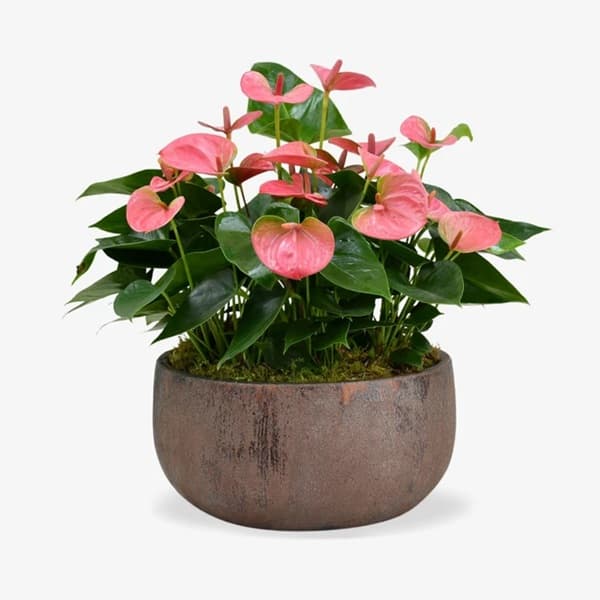
The flamingo flower is one of the few houseplants that blooms continuously, given the right conditions. The bright spathes — pink, red, or white — are actually modified leaves; the true flower is the small central spike. Tropical, dramatic, and rewarding.
Light
Bright indirect
Water
Regular
Sourcing
Direct from growers
Pet safety
Toxic
Difficulty
Moderate
How to care for it
Place in bright indirect light — anthurium needs light to keep blooming. Avoid direct sun, which scorches the leaves. The plant likes humidity; group with other plants or place in a bright bathroom. Water thoroughly on arrival with filtered or rainwater.
Water when the top inch of soil is dry, keeping the soil consistently moist but never waterlogged. Use filtered or rainwater where possible. Feed every two weeks in spring and summer with a balanced liquid fertiliser at half-strength. Remove spent spathes by cutting at the base. Wipe leaves occasionally.
No new flowers: usually too little light or too cool a room — anthurium needs warmth and brightness to bloom continuously. Yellow leaves: overwatering or cold drafts. Brown leaf tips: low humidity or salt build-up. Spathes turning brown: aging — cut them off at the base to encourage new ones.
Common questions
Three requirements: bright indirect light, warmth (above 18°C consistently), and regular feeding at half-strength every couple of weeks through spring and summer. Cut spent spathes off at the base to encourage new ones. With those conditions, anthurium blooms almost continuously.
The waxy coloured part you see — the spathe — is not technically the flower. It is a modified leaf called a bract. The true flowers are the tiny ones on the central spike (the spadix). Both together make the dramatic look of the plant.
Yes — toxic. All parts of anthurium contain calcium oxalate crystals; chewing causes intense mouth pain, drooling, vomiting, and difficulty swallowing in cats and dogs. Keep firmly out of reach of pets that graze on plants. If a pet has chewed any part, contact a vet promptly.
Usually overwatering or cold draughts. Anthurium wants consistent moisture but resents waterlogged roots. Check the soil first, then the room temperature. If only the oldest leaves yellow, that is natural turnover.
A single spathe stays open for many weeks — among the longest-lasting flowers on any houseplant. As one finishes and is cut off, another emerges. In ideal conditions the plant is rarely without colour.
Low humidity or salt build-up from tap water. Raise local humidity by grouping plants or using a pebble tray; flush the soil occasionally with rainwater or filtered water to clear mineral salts.
See also