Kentia palm care
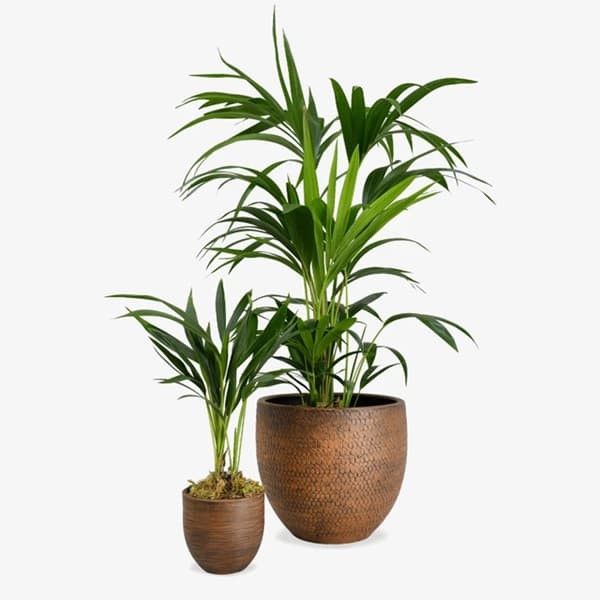
Howea forsteriana
The Kentia palm has been the favourite of grand interiors since Victorian times — it tolerates low light, dry air, neglect, and the kind of overheated rooms that kill most palms. Slow-growing, architecturally elegant, and extraordinarily forgiving.
Light
Medium
Water
Moderate
Sourcing
Direct from growers
Pet safety
Pet-safe
Difficulty
Very easy
How to care for it
Place in bright indirect light — Kentia tolerates lower light than most palms but rewards a brighter spot with faster growth. Avoid direct midday sun on the fronds. Water thoroughly on arrival if the soil feels dry, then let it settle.
Water when the top two inches of soil feel dry. Kentia prefers slightly drier than wet; overwatering is the most common cause of decline. Feed monthly in spring and summer with a balanced liquid fertiliser. Wipe the fronds with a damp cloth occasionally to remove dust and let them photosynthesise properly.
Brown tips on the fronds: dry air, salt build-up from tap water, or inconsistent watering. Flush the soil with rainwater or filtered water occasionally and raise local humidity. Yellow lower fronds: usually overwatering — back off and let it dry. Brown spots on fronds: too much direct sun.
Common questions
Bright indirect light is ideal, but Kentia tolerates lower light better than almost any other palm. Avoid harsh direct midday sun on the fronds — it scorches them. A few feet back from a north or east-facing window suits well.
Three common causes: dry indoor air (especially in winter with central heating), salt build-up from tap water, or letting the soil dry out too completely between waterings. Raise humidity by grouping plants, water with rainwater or filtered water occasionally to flush the salts, and keep watering consistent.
Yes — Kentia palm (Howea forsteriana) is non-toxic to cats and dogs. One of the few large indoor palms that is genuinely pet-safe. The fronds may cause mild upset if a pet chews on them, but it is not poisonous.
Slow. A Kentia takes years to gain serious height — the larger specimens sold by Moyses Stevens have been growing for fifteen or twenty years before they reach you. Slow growth is part of why they hold their shape well as houseplants.
Less often than other plants — Kentia actually prefers to be a touch root-bound. Every three to five years is plenty. Spring is the right time. Use a deep pot (Kentia has long roots) and a well-draining compost.
Usually thirst. Water thoroughly and the fronds should recover within a day. If drooping persists after watering, check for root rot — pull the plant from its pot and look at the roots; healthy roots are firm and pale, rotten roots are mushy and dark.
See also