Rose plant care
Rosa
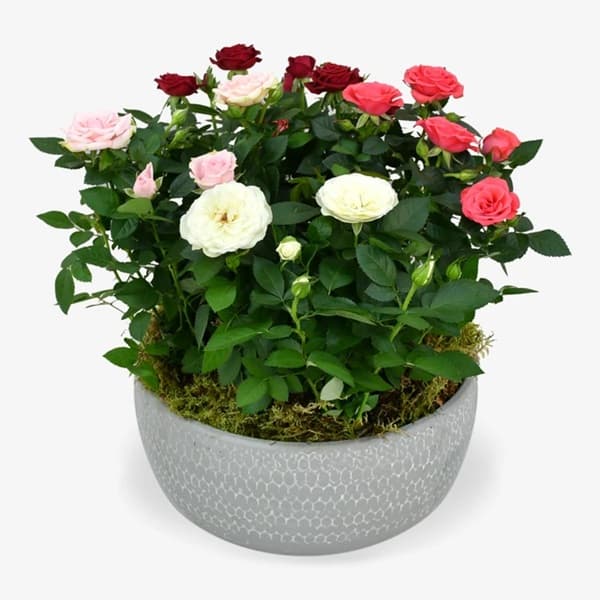
A rose plant gifted indoors is a special object — a living version of the most-loved cut flower, often given for romantic occasions. The indoor period is a holding pattern; the rose's long life is in a sunny outdoor spot, where it can flower for decades.
Light
Bright indirect
Water
Regular
Sourcing
Direct from growers
Pet safety
Pet-safe
Difficulty
Moderate
How to care for it
Indoors, place in the brightest spot you have — roses want sun. Keep cool; warm rooms make the blooms finish faster. Water thoroughly on arrival and keep the soil consistently moist while blooming. Plan to move outdoors in spring when frost risk has passed.
Indoor period: water when the top inch of soil is dry, deadhead spent blooms. Outdoor transition: acclimatise gradually over a fortnight, placing the pot outside in a sheltered spot for increasing periods each day. Once outside permanently, water deeply rather than little and often, feed monthly through the growing season, deadhead through the summer to encourage repeat flowering, and prune back in late winter.
Indoor leaf drop: too warm and too dry. Move cooler and water consistently. Yellowing leaves: overwatering or natural shed. Black spots on leaves: black spot fungus, common on outdoor roses — remove affected leaves, ensure good air circulation, treat with fungicide. Aphids on new growth: wipe off or treat with insecticidal soap.
Common questions
Not well, and not for long. Roses are deciduous outdoor shrubs that need cool winters and full sun — they decline steadily as indoor plants past the first month. The right path is to keep indoors briefly while it is in bloom, then move outside in spring for the long life.
Yes — roses are non-toxic to cats and dogs. The thorns can cause cuts inside the mouth if pets chew the stems, and the foliage is unpleasant to digest, but the plant itself is safe. One of the few flowering plants in the catalogue that is genuinely pet-safe.
Spring, once the risk of hard frost has passed. Acclimatise gradually over a fortnight before transplanting. Choose a spot with at least six hours of direct sun a day and rich, well-drained soil. Plant deep enough that the graft union (the swelling at the base of the stem) is just at soil level.
If indoors and only some lower leaves yellow, that is normal — roses shed older leaves. If many leaves yellow at once, it is either overwatering, too little light, or a warm indoor environment forcing rapid decline. The rose wants to be outside.
Deadhead — cut off spent blooms at the next leaf set down the stem. This encourages new flowering shoots. Feed monthly through the growing season with a rose-specific fertiliser. Plenty of sun and water. Annual pruning in late winter keeps the plant productive.
Decades in the right outdoor spot. Old roses in long-established gardens can be over fifty years old and still flowering. A gifted rose plant moved outdoors in its first spring can be a generation-spanning feature of the garden.
See also