ZZ plant care
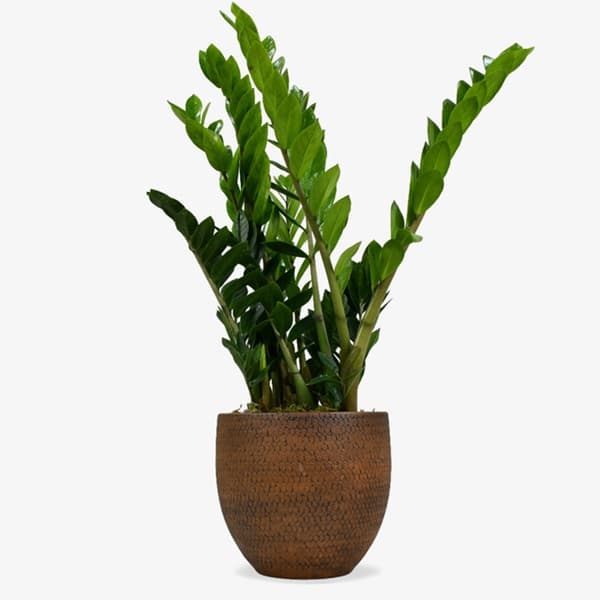
Zamioculcas zamiifolia
The ZZ plant is the closest thing to an indestructible houseplant in the catalogue. It tolerates neglect, low light, dry air, missed waterings — almost the only thing that kills it is being too attentive. The glossy paddle-shaped leaflets give it a sculptural, slightly waxy elegance.
Light
Low
Water
Infrequent
Sourcing
Direct from growers
Pet safety
Mildly toxic
Difficulty
Very easy
How to care for it
Place in low to medium indirect light. ZZ tolerates lower light than almost any other houseplant. Avoid direct sun. The plant comes with rhizomes (potato-like underground stems) that store water — do not be eager to water on arrival; check the soil first.
Water sparingly. Let the soil dry out completely between waterings — every two to four weeks is plenty, less in winter. The rhizomes hold reserves; overwatering causes them to rot. Feed lightly every couple of months in spring and summer; ZZ does not need much. Wipe the leaves with a damp cloth to keep them glossy.
Yellow leaflets: almost always overwatering. Let the plant dry out completely. Brown stem bases or mushy rhizomes: root rot — repot in fresh, dry compost and trim the affected rhizomes. Drooping fronds: rare; if it happens, check for serious root rot. Pale or stretched growth: too little light — move brighter.
Common questions
Less often than you would think. Every two to four weeks in spring and summer, less in winter. Let the soil dry out completely between waterings. The rhizomes (underground stems) store water — overwatering is the only common way to kill this plant.
Mildly. ZZ plant (Zamioculcas zamiifolia) contains calcium oxalate crystals — chewing causes mouth irritation, drooling, and stomach upset in pets and humans. Wash hands after handling cut stems. Keep out of reach of pets and small children.
Very little. ZZ tolerates everything from bright indirect light down to genuinely dim spots — interior corners, north-facing rooms, hallways. Avoid direct sun, which scorches the leaves. More light means faster growth; low light means slow but healthy.
Overwatering. The rhizomes are rotting under wet soil. Stop watering, let it dry out completely, and consider repotting in fresh dry compost if many leaves yellow. Yellowing is almost never underwatering with ZZ.
Slowly. Expect one or two new fronds per year in moderate conditions, more in bright light. The slow growth is part of why it stays in shape for years without much intervention.
Yes — when repotting in spring, you can gently separate the rhizome clumps and pot each into its own container. Each rhizome will produce new fronds. This is the easiest way to propagate; leaf cuttings work but take many months.
See also