Astilbe care
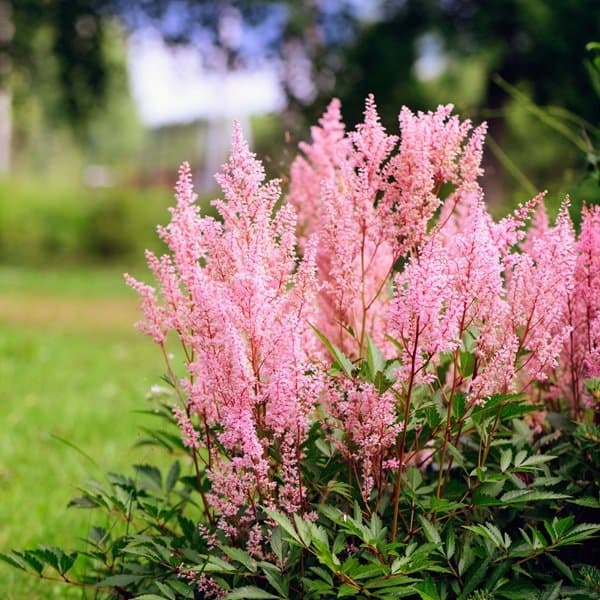
Astilbe is the soft feather of the bouquet — a plume of tiny flowers on a fine stem, all texture and movement. It brings a feathery lightness that nothing else quite matches, and it asks for one thing in return: water, and plenty of it.
Season
May–September
Vase life
Medium
Sourcing
Direct from growers
Difficulty
Moderate
How to care for them
Astilbe is thirsty and wilts fast if it runs dry. Re-cut the stem at a sharp angle and get it into deep cool water quickly. Strip any lower foliage. A generous reservoir matters more than the vase shape.
Top the water up daily and keep the vase full — astilbe drinks heavily and is the first stem in a mixed bouquet to flag if the water drops. Keep cool and out of direct sun.
A wilted plume usually means it has run dry. Re-cut the stem and stand it in deep cool water for an hour or two. Mist the plume lightly. It often revives, though astilbe is less forgiving than woodier stems.
Common questions
Astilbe is exceptionally thirsty — the fine plume loses moisture fast and the stem must keep up. If the vase runs even briefly dry, it flags. The fix is a deep, full reservoir of cool water, topped up daily.
A medium display — several days when kept in deep cool water and out of heat. It is more demanding on water than most stems, so the care makes a real difference. Every order carries our Stem freshness promise.
Yes — astilbe dries well. Hang the stems upside down in a dry, dark spot and the plumes hold their feathery shape, fading to soft antique tones. A good way to keep the texture long after the fresh display is done.
White, cream, soft pink, deep pink, coral and red. The whites and soft pinks are the most requested for their delicate, feathery look in romantic and bridal arrangements.
Astilbe is at its best through the warmer months, roughly May to September. We source direct from growers to carry the strongest stems through the season.
Texture and movement. Its feathery plumes soften the structure of an arrangement and add a sense of lightness around denser flowers like roses, peonies and hydrangea. It is a favourite for soft, romantic designs.
Astilbe is not listed as toxic to cats or dogs. As with any cut flower, do not encourage pets to chew the stems, but the flower itself is considered safe.
Pairs beautifully with