Astrantia care
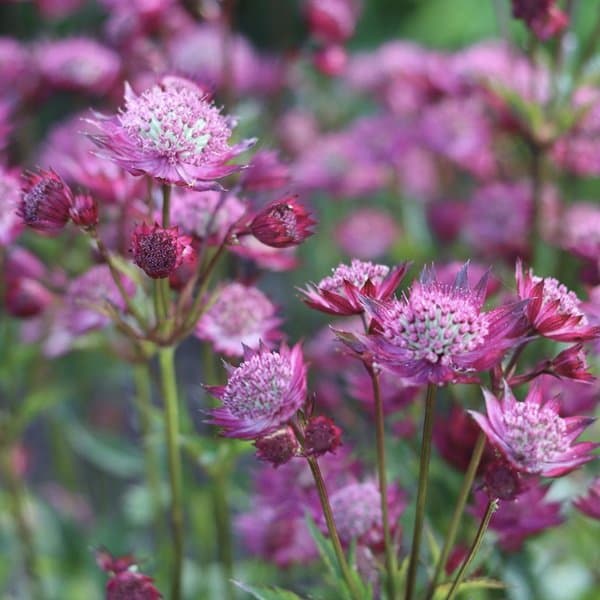
Astrantia rewards a closer look. From a distance it reads as a soft haze of tiny flowers; up close, each one is an intricate pincushion ringed by a papery collar of bracts. A florist's flower — quiet, detailed, and beautiful in the supporting role.
Season
May–October
Vase life
Medium
Sourcing
Direct from growers
Difficulty
Easy
How to care for them
Re-cut each stem at a sharp angle. Strip any leaves below the waterline. Cool clean water in a clean vase — astrantia is undemanding on depth.
Refresh the water every two or three days. Astrantia holds its intricate shape well; remove any individual flowers that finish ahead of the rest. Keep cool and out of direct sun.
If a stem droops, re-cut higher up and refresh the water. Astrantia is fairly resilient and usually recovers within an hour or two.
Common questions
A medium display — several days with cool clean water and regular refreshes. It holds its intricate detail well over that time. Every order carries our Stem freshness promise.
Detail and texture. Its tiny, intricate flowers fill the spaces between larger blooms and add a soft, meadowy quality. It is a favourite for natural, garden-style and bridal arrangements.
Yes — astrantia dries nicely thanks to its papery bracts. Hang the stems upside down in a dry, dark spot and they hold their shape and fade to soft muted tones.
Soft white and green, dusky pink, and deep ruby red. The pale green-white and dusky pink varieties are the most requested for natural, romantic designs; the deep reds bring contrast.
Astrantia is at its best from late spring through autumn, roughly May to October. We source direct from growers to carry the best stems through the season.
Very little — it is chosen for its intricate look rather than fragrance. For scent in a mixed bouquet the studio pairs it with sweet pea, stock or freesia.
Astrantia is not listed as toxic to cats or dogs. As with any cut flower, do not encourage pets to chew the stems, but the flower itself is considered safe.
Pairs beautifully with