Dendrobium orchid care
Dendrobium
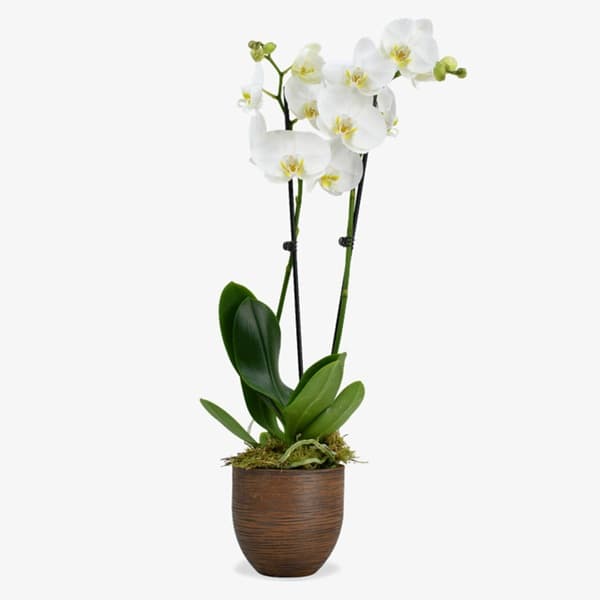
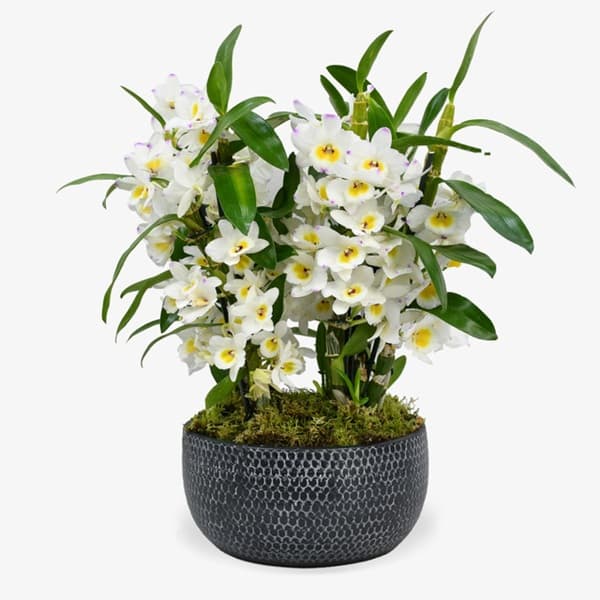
Dendrobium orchids are taller and more architectural than the more common Phalaenopsis — slender canes carry cascading sprays of waxy flowers, often white or purple. Slightly more demanding than the moth orchid, but worth the small extra attention.
Light
Bright indirect
Water
Moderate
Sourcing
Direct from growers
Pet safety
Pet-safe
Difficulty
Moderate
How to care for it
Place in bright indirect light — Dendrobium needs more light than Phalaenopsis. A bright east or south window with some shading from direct midday sun suits well. Avoid moving the plant around once placed; Dendrobium dislikes disturbance, especially when flowering.
Water roughly once a week in summer, less in winter — Dendrobium wants a clear dry period between waterings. As with all orchids, water in the sink, drain completely, never let it stand in water. Feed every two weeks in growing season with a specialist orchid fertiliser at half-strength. A cooler winter rest with reduced watering encourages reflowering.
Wrinkled canes: dehydration; water more often. Yellow leaves: too much direct sun or natural shed. Brown soggy roots: root rot from overwatering. No flowers: insufficient temperature drop in autumn-winter — Dendrobiums need a cool rest to trigger blooming.
Common questions
Dendrobium is taller and more upright — long slender canes carry cascading sprays of smaller flowers, often dozens per cane. Phalaenopsis is shorter and rounder with fewer, larger flowers. Dendrobium needs more light and a cooler winter rest; Phalaenopsis is more forgiving year-round.
Roughly once a week in summer, less in winter — Dendrobium prefers a clearer dry period between waterings than Phalaenopsis. Water in the sink, let drain completely. The canes should feel firm; wrinkled canes mean too dry.
Yes, with a cool winter rest. Reduce watering and stop feeding through late autumn and winter, keeping the plant in a cooler spot (around 12-15°C is ideal). In spring, return to normal warmth and watering; new flower spikes should emerge.
Yes — Dendrobium species are non-toxic to cats and dogs. Generally orchids are among the safer flowering houseplants for pet households. As always, discourage chewing for the plant's sake.
Each spike holds many weeks to a couple of months. The cascading sprays make for a particularly long flowering display compared to many other houseplants.
No — leave them. New growth and new flowers come from the canes that have already flowered. Cutting them removes future flowering potential. Only remove canes that are completely brown and dried.
See also