Medinilla magnifica care
Medinilla magnifica
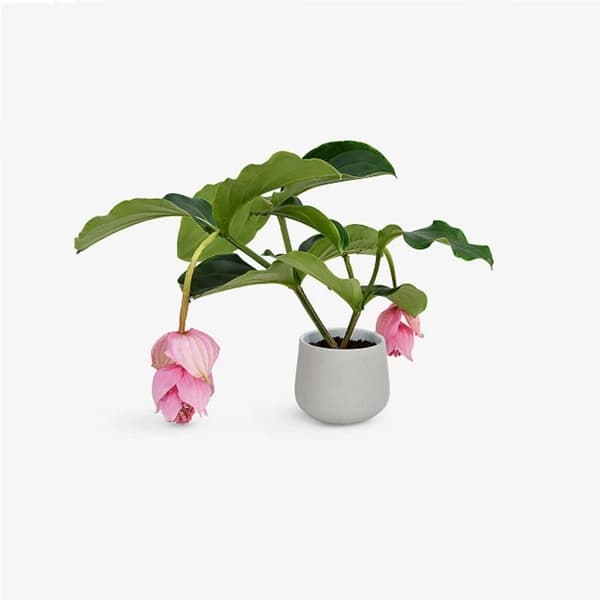
Medinilla magnifica is one of the most theatrical flowering plants we send — vast pink panicles cascading from architectural leaves, like a Victorian-era exotic that escaped from a botanical glasshouse. Demanding, but worth the attention when it puts on its show.
Light
Bright indirect
Water
Regular
Sourcing
Direct from growers
Pet safety
Pet-safe
Difficulty
Demanding
How to care for it
Place in bright indirect light — the plant wants serious brightness to bloom, but direct sun scorches. Find a stable spot away from heat sources and draughts. Water thoroughly on arrival. The plant likes humidity; group with other plants or place near a humidifier.
Keep the soil consistently moist but never waterlogged. Water when the top inch is dry. Use filtered or rainwater. Feed every two weeks in spring and summer with a balanced liquid fertiliser at half-strength. Higher humidity than the average room is important. After flowering finishes, allow a cooler, drier rest period of a few weeks to encourage the next flowering cycle.
Yellowing leaves: too much sun or overwatering. Brown edges: low humidity. Flower bud drop: stress from being moved, draughts, or sudden temperature change — Medinilla dislikes any kind of disturbance once flowering is underway. No reflowering: insufficient cool rest period after a flowering season. Pests: occasional mealybug — wipe with insecticidal soap.
Common questions
Yes, with the right care. After a flowering season ends, give the plant a cooler (around 15°C), drier rest of about a month — water less, stop feeding. Then return to normal warmer conditions with regular feeding, and new flower spikes should emerge. This rest period is essential; without it, reflowering rarely happens.
Medinilla is not listed as toxic to cats or dogs by the major veterinary databases. As with all houseplants, do not encourage pets to eat them, but the plant itself is regarded as safe.
Stress is the usual cause: the plant has been moved, knocked, exposed to cold draughts, or experienced sudden temperature change. Medinilla is particularly sensitive once flowering is underway — find a good spot in advance and leave it there until the cycle finishes.
Bright indirect light. The plant needs brightness to bloom but cannot tolerate direct sun (scorches the leaves). A spot a few feet back from an east or south-facing window, with some shading if the sun is direct, suits well.
Most often overwatering or too much direct sun. Check the soil first — let it dry out partway between waterings. If the spot gets direct afternoon sun, move it back.
Each panicle holds for many weeks, sometimes over a month in good conditions. The plant flowers in spring and summer; with proper cool rest after, the cycle can repeat year after year.
See also