Eternal flame plant care
Calathea crocata
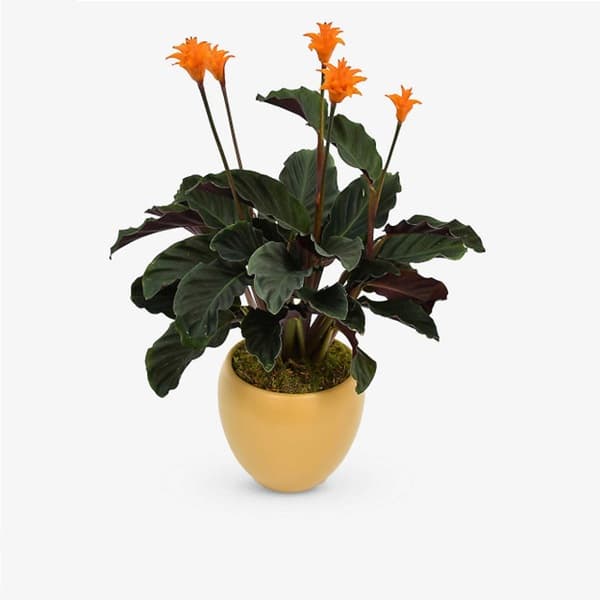
The eternal flame plant is the rare Calathea that flowers indoors — torch-like bright orange clusters held above the deep green leaves. The blooms can last for weeks, and given the right conditions the plant produces them in succession through the year.
Light
Bright indirect
Water
Regular
Sourcing
Direct from growers
Pet safety
Pet-safe
Difficulty
Moderate
How to care for it
Place in bright indirect light — no direct sun. Like other Calatheas, this plant is sensitive to tap water minerals; use filtered or rainwater from the start. Group for humidity. Water thoroughly on arrival.
Keep the soil consistently moist but never waterlogged. Water when the top inch feels dry. Use filtered or rainwater. Feed every two weeks in spring and summer at half-strength to encourage flowering. Higher humidity than the average room — pebble tray or grouped plants. Cut spent flower spikes at the base.
Brown crispy edges: low humidity or tap water sensitivity. Yellow leaves: overwatering or cold drafts. Faded leaf colour: too much direct light. No flowers: too little light, or recently moved — flowering pauses after a stress event. Curling leaves: thirst, low humidity, or cold.
Common questions
Bright indirect light, warmth (above 18°C consistently), and regular feeding at half-strength every two weeks through spring and summer. Use filtered or rainwater. Once a flowering cycle is set, the plant produces new spikes in succession. Recently moved or repotted plants pause flowering until they settle.
Yes — Calathea species are non-toxic to cats and dogs. Safe to have around pet households. Discourage chewing for the plant's sake, but it is not harmful.
Each spike lasts many weeks. A healthy plant produces new spikes in succession through spring and summer, so a well-cared-for eternal flame can be almost continuously in colour for months. Cut spent spikes off at the base to encourage new ones.
Mild curling is natural — Calatheas are prayer plants that move through the day. Persistent curling means thirst, low humidity, or cold drafts. Check the soil, raise humidity, and keep away from windows that draught cold air.
Low humidity or tap water sensitivity. The plant is from Brazilian rainforest — it wants moist air. Switch to filtered or rainwater if you can, and raise local humidity with grouped plants or a pebble tray.
Yes — when repotting in spring, you can carefully separate the rhizome clumps and pot each into its own container. This is the easiest way to propagate Calatheas.
See also