Strelitzia care
Strelitzia nicolai
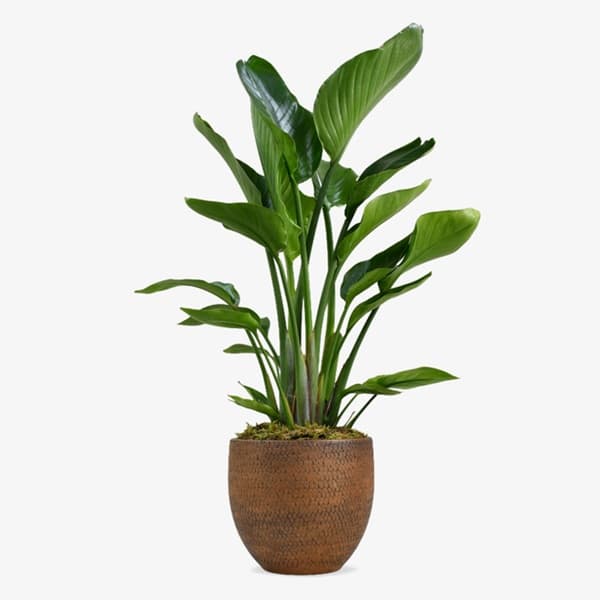
Strelitzia — the bird of paradise — is statement architecture in plant form. The paddle-shaped leaves are vast, the plant grows tall, and given the right light, it can produce the famously dramatic crane-headed flower indoors, though this takes patience and a sunny room.
Light
Bright indirect
Water
Moderate
Sourcing
Direct from growers
Pet safety
Mildly toxic
Difficulty
Easy
How to care for it
Place in bright indirect light — Strelitzia is happiest in the sunniest spot in your home, though it tolerates a few hours of direct morning sun without scorching. Water thoroughly on arrival. The plant is large; give it space for the leaves to unfurl without bumping walls or furniture.
Water when the top two inches of soil are dry. Strelitzia drinks heavily in summer and barely at all in winter. Feed monthly through spring and summer with a balanced liquid fertiliser. Wipe the broad leaves occasionally with a damp cloth — they collect dust quickly. Mature plants benefit from a yearly repotting in spring until they reach the largest pot you can manage.
Split or torn leaves: actually normal — in their natural habitat Strelitzia leaves split along the veins to let wind through. Indoor splits can also come from being knocked or jostled. Brown crispy edges: dry air or under-watering. Curled leaves: thirst or low humidity. Lack of flowers: needs more direct light and patience — indoor Strelitzia rarely flowers before several years of growth.
Common questions
Possibly, but it takes patience. Indoor Strelitzia rarely flowers before five to seven years of growth, and it needs the sunniest spot in your home plus a degree of root-bound stress to trigger blooming. Most people grow them for the dramatic foliage alone.
Splits along the veins are natural. In the wild, the leaves evolved to split so wind can pass through without tearing the leaf. Some indoor splitting happens too, especially on older leaves or after a knock. It does not harm the plant.
Mildly. Strelitzia is listed as mildly toxic to cats and dogs — chewing can cause mild gastrointestinal upset. The fruit and seeds are more toxic than the leaves but are not produced on indoor plants. Keep out of reach of pets that chew on plants.
A lot. Bright indirect light is the minimum; direct morning sun is welcome. South or west-facing windows are ideal. Strelitzia in dim spots will survive but not thrive, producing smaller, paler leaves and never flowering.
Steady — a healthy plant in good light produces several new leaves per year. Younger plants grow faster than mature ones. The largest specimens in the Moyses Stevens catalogue are several years old.
Usually thirst or low humidity. Water thoroughly. Strelitzia comes from southern Africa; it appreciates a moderate amount of humidity but tolerates dry air better than tropical plants. Persistent curling after watering suggests root issues — check for rot.
See also