Orchids care
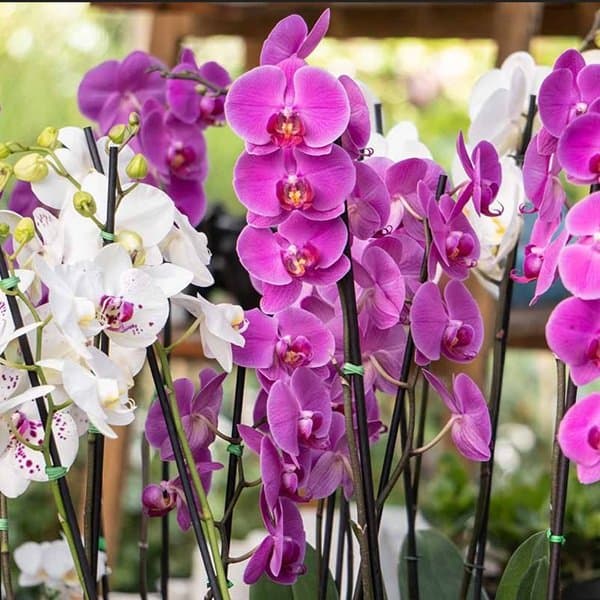
Cut orchids bring a quiet exoticism to an arrangement — sculptural, long-lasting, and unlike anything else in the bouquet. Where the orchid plant is a months-long commitment, cut orchid stems are an elegant, architectural flourish for the table.
Season
Year-round
Vase life
Long
Sourcing
Direct from growers
Difficulty
Easy
How to care for them
Re-cut each stem at a sharp angle. Orchids prefer clean, room-temperature water rather than very cold. Use a clean vase tall enough to support the arching stems. Keep out of draughts and direct sun.
Refresh the water every few days and re-cut the stem ends. Orchids are sensitive to ethylene gas, so keep them away from ripening fruit, which shortens their life. A light mist on the blooms suits them.
If a stem flags, re-cut it and place in fresh room-temperature water. Orchids dislike cold shock, so avoid icy water. They are long-lasting and usually recover well from a re-cut and water change.
Common questions
A long display — cut orchid stems are among the longer-lasting exotic flowers, holding for a good while with clean room-temperature water and regular re-cutting. Every order carries our Stem freshness promise.
A cut orchid is a single flowering stem used in arrangements; an orchid plant (such as a potted phalaenopsis) is a living plant that re-blooms for years. For long-lived potted orchids, see our Orchids plant collection.
Room-temperature water, not cold. Orchids are tropical and dislike the cold shock that suits temperate flowers like tulips. Clean, tepid water keeps them happiest.
The most common culprit is ethylene gas from ripening fruit nearby — orchids are unusually sensitive to it. Keep them away from the fruit bowl, out of draughts and direct sun, and refresh the water regularly.
Most commonly cymbidium, dendrobium and phalaenopsis stems, chosen for their sculptural form and longevity. The studio selects by what is at its best and suits the design.
Most florist orchids have little to no scent — they are chosen for their dramatic, sculptural form. A few species carry a light fragrance, but it is not their main appeal.
True orchids (including phalaenopsis, cymbidium and dendrobium) are not listed as toxic to cats or dogs — among the safer exotic flowers for pet households. As always, do not encourage pets to chew the stems.
Pairs beautifully with